Our work has been published in PNAS!
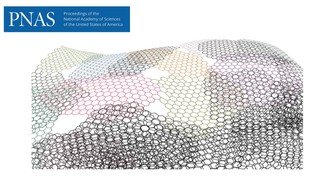
The energy efficiency of gas separation is expected to benefit from the development of membranes yielding selective but large permeance. The ultimate limit of this is two-dimensional films hosting a high density of molecular-selective apertures (e.g., nanoporous single-layer graphene). Currently, pores are incorporated in single-layer graphene by postsynthetic etching route, and the direct bottom-up synthesis of nanoporous graphene, especially targeting a high pore density, remains a grand challenge attributing to a number of crystallization bottlenecks. We address this by increasing the density of molecular-sized intrinsic vacancy defects in graphene by developing crystallization conditions which promote the growth of misoriented grains, limiting the grains to a few nanometers in size and preventing a complete grain intergrowth while yielding mechanically robust films.